

We often think emotions begin in the mind. In our experience, they usually begin earlier, in the body. A tight jaw appears before anger has a name. A shallow breath comes before anxiety is clear. A sinking stomach shows up before fear reaches our thoughts. The body speaks first, and it speaks in small signals.
Body language is not only what others see. It is also the inner set of sensations that warn us something is shifting.
Many of us miss these signs because we live fast. We answer messages, solve tasks, and move from one demand to the next. Then, suddenly, we say, “I do not know why I reacted like that.” But when we slow down and look back, there were clues. The shoulders had lifted. The chest had hardened. The hands had become cold.
This kind of attention is not about control. It is about honesty. We are not trying to stop emotion from existing. We are trying to notice its early arrival, while it is still forming.
Why the body speaks first
The body is always reading our surroundings. It reacts to tone of voice, memory, pressure, conflict, and even silence. Long before we form a full emotional story, the nervous system has already made adjustments. Muscles tense. Breath changes. Energy rises or drops.
We have seen this in very ordinary moments. Someone enters a meeting feeling “fine,” then notices a stiff neck when a certain topic comes up. Another person says they are calm, but their foot keeps tapping under the table. These are not random details. They are messages.
The body rarely waits for words.
When we learn to notice these shifts early, we gain space. That space can keep a hard conversation from turning harsh. It can help us rest before exhaustion becomes irritation. It can also show us that what we call “sudden emotion” was building quietly for some time.
What early body signals can look like
Not all body signals are dramatic. Most are subtle. They are easy to dismiss, especially if we are used to pushing through discomfort. Still, patterns tend to repeat.
Some common early signs include:
Tightness in the jaw, throat, or chest
Changes in breathing, such as holding the breath or breathing too fast
Heat in the face or ears
Cold hands or a cold stomach
Restless legs, tapping fingers, or clenched fists
Sudden heaviness, fatigue, or a wish to withdraw
Each person has a different pattern. For one of us, tension may gather in the shoulders. For another, it may appear as nausea or pressure behind the eyes. The goal is not to memorize a universal map. The goal is to know our own map.
Repeated physical signals often point to repeated emotional patterns.
How to build body awareness in real time
We do not need a perfect setting to notice the body. We need short pauses and honest observation. A few seconds can be enough. The practice gets stronger with repetition.
A simple sequence can help:
Pause for one breath before answering, speaking, or reacting.
Ask, “What is happening in my body right now?”
Name one sensation only, such as pressure, heat, trembling, or numbness.
Stay with that sensation for a moment without trying to fix it.
Then choose your next action with more clarity.
This sounds simple. It is simple. But simple does not mean easy. Many people feel awkward at first because they are used to explaining feelings, not sensing them. Still, the shift is powerful. We stop jumping straight into interpretation and start with direct experience.
One day, a person may notice their stomach contract before opening an email from a family member. On another day, they may feel their chest soften when a conversation becomes sincere. Both matter. The body does not only warn us about pain. It also points to relief, safety, and truth.

What gets in the way
Several habits make body awareness harder. One is constant distraction. If every empty moment is filled with noise, the body has no chance to be heard. Another is judgment. If we treat every signal as weakness, we will ignore it until it becomes too loud to miss.
We also confuse endurance with maturity. We tell ourselves to keep going, stay strong, or not make a big deal out of things. Then the ignored signal returns in a stronger form.
We think it helps to watch for these three traps:
Naming thoughts instead of sensations
Waiting for intense symptoms before paying attention
Trying to correct the body before understanding what it is saying
When we stop fighting the signal, we can finally learn from it.
How to practice without turning it into pressure
Body awareness works better when it is gentle. If we force it, we create another layer of tension. We do not need to monitor ourselves all day. We can choose a few steady moments and return to them.
Good times to check in include after waking up, before meals, before difficult talks, and after stressful tasks. These moments are natural transitions. They help us notice changes without making the practice heavy.
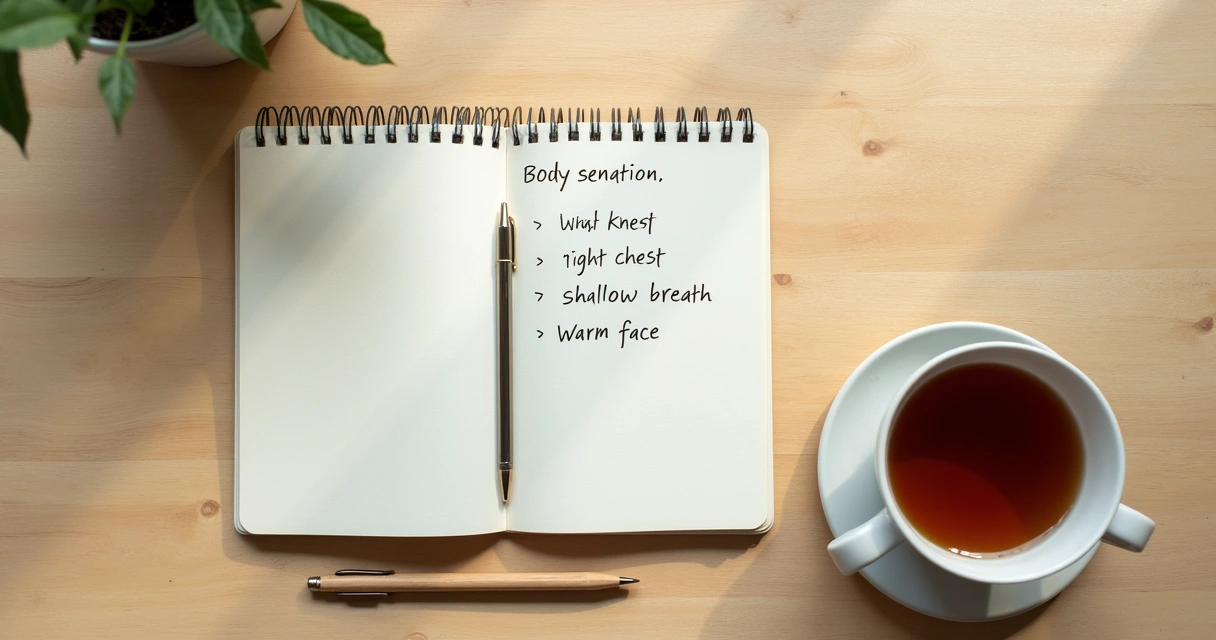
It can also help to keep notes. Not long notes. Just a few words. “Tight chest before call.” “Heavy legs after visit.” “Warm face during praise.” Over time, we begin to see links between situation, sensation, and emotion.
That is when self-knowledge becomes more grounded. Not abstract. Not distant. Felt.
When small signals change bigger outcomes
We have seen how small moments of noticing can change the tone of a whole day. A person catches their jaw tightening and decides not to send the message yet. Someone else feels sudden heaviness and understands they are hurt, not lazy. Another notices fast breathing and chooses to step outside before speaking in anger.
These are quiet forms of maturity. They do not look dramatic from the outside. Yet they change relationships, choices, and self-respect.
Awareness creates choice.
The body will keep speaking whether we listen or not. If we listen earlier, emotions do not disappear, but they become clearer and less confusing. We react less on autopilot. We become more present inside our own experience.
Conclusion
To notice the body’s language before emotions arise, we need patience, repetition, and a more sincere pace of attention. The body gives signals before the mind builds a full explanation. When we learn our own signs, we catch emotion closer to its beginning. That gives us more room to respond with care, not only impulse.
We do not need to become experts in every sensation. We only need to become more available to what is already happening. A tighter throat, a restless leg, a sudden drop in energy, these small signs can teach us a great deal. If we stay close to them, we begin to know ourselves in a deeper and more responsible way.
Frequently asked questions
What is body language before emotions?
It is the set of physical sensations and reactions that appear before we clearly identify an emotion. This may include muscle tension, changes in breathing, stomach discomfort, heat, or restlessness. Body language before emotions is the body’s early warning system.
How can I notice my body's signals?
We can notice them by pausing during the day and asking what is happening in the body right now. It helps to focus on direct sensations instead of stories. Short check-ins before conversations, after stress, or during silence make the signals easier to detect.
Why notice body signs before emotions?
Noticing body signs early gives us more choice in how we respond. Instead of reacting when emotion is already strong, we can sense the first shift and act with more clarity. This can reduce impulsive reactions and support more honest self-understanding.
What are common early body signals?
Common early signs include a tight jaw, raised shoulders, shallow breathing, a knot in the stomach, clenched hands, warm cheeks, cold hands, or sudden tiredness. These signals vary from person to person, so it helps to observe which ones appear often in our own experience.
How to practice noticing my body's language?
We can practice by choosing a few moments each day to pause and scan the body. A simple method is to stop, breathe once, name one sensation, and stay with it briefly. Writing down repeated sensations after certain situations can also help us see patterns and understand emotions earlier.