

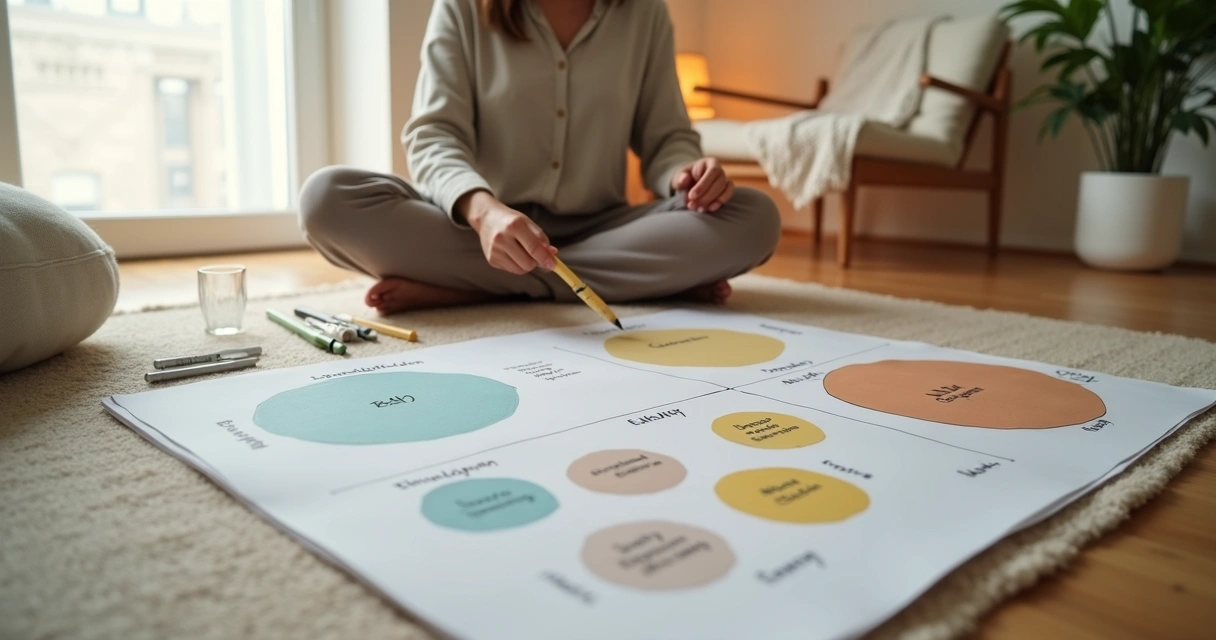
Many of us notice our emotions only when they get loud. We snap at someone we care about. We lose focus. We feel heavy for no clear reason. Then we ask, “What happened to me today?” In our experience, that question often comes too late.
A daily emotional check-in is a simple pause. It helps us notice what is already happening inside, before our state starts choosing our words, tone, and actions for us.
A daily emotional check-in is a brief moment to name what we feel, notice what may be shaping it, and choose how to respond.
This is not about controlling every feeling. It is about becoming more present with our inner life. When we do that often, we start to see patterns. We see what drains us, what steadies us, and what we keep pushing aside.
We once spoke with someone who said, “I thought I was angry all week.” After a few days of checking in, that person noticed the anger was often tiredness mixed with disappointment. That small shift changed the whole week. Short pause. Big difference.
Why daily check-ins matter
Emotions do not appear in a vacuum. They connect with sleep, memory, stress, conflict, expectations, and even our body posture. If we only react to the surface feeling, we miss the whole picture.
Daily check-ins help us build a more honest relationship with ourselves. We stop asking only, “How do I get rid of this feeling?” and begin asking better questions.
What am I feeling right now?
What happened before this feeling grew?
What does this emotion push me to do?
What response would be more aligned with who I want to be?
That kind of awareness supports maturity. Not the kind that looks calm from the outside while boiling inside, but the kind that can hold discomfort without turning it into confusion or harm.
Some research also suggests that how often people regulate emotions changes across age groups. In findings comparing younger and older adults in daily emotional regulation reports, younger adults reported regulating emotions more often than cognitively normal older adults. We think this is a useful reminder that emotional habits are lived differently across life, and that conscious check-ins can help us notice our own style rather than assume everyone works the same way.
What we notice, we can guide.
What to include in a check-in
A good check-in does not need many steps. It just needs honesty. We suggest keeping it simple enough to repeat every day.
You can move through these five points in order:
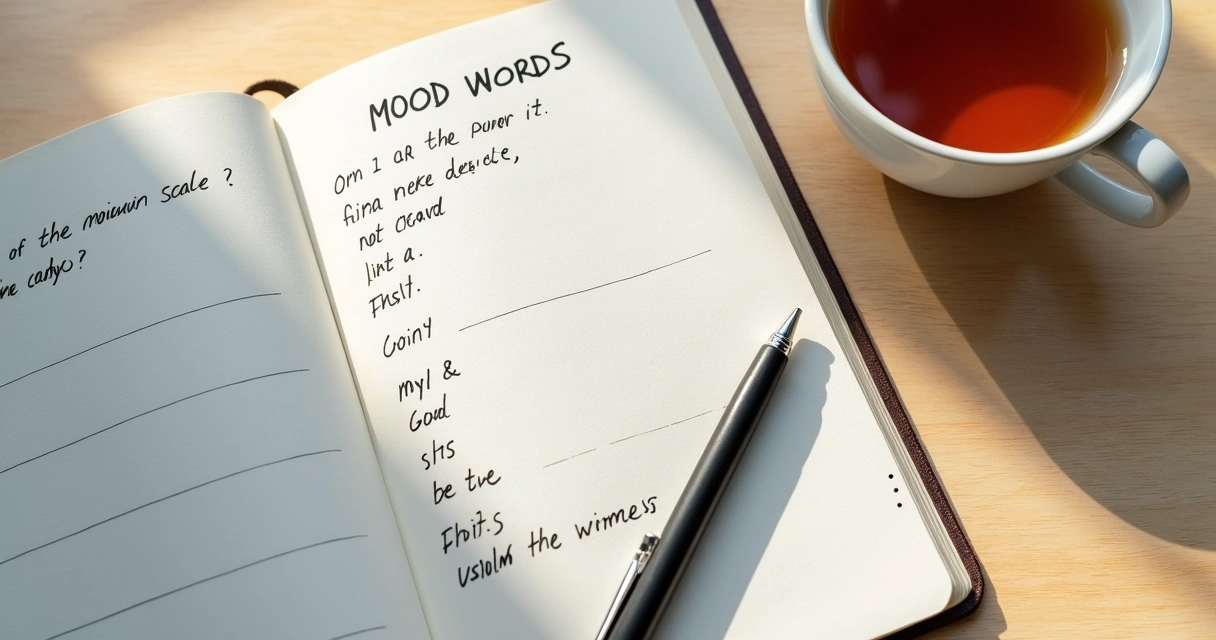
Name the emotion. Try plain words such as tense, sad, irritated, calm, hopeful, ashamed, or restless.
Rate the intensity. A scale from 1 to 10 works well.
Notice the trigger. Ask what happened before the feeling became clear.
Scan the body. Look for pressure in the chest, a tight jaw, fast thoughts, low energy, or stomach discomfort.
Choose a response. Decide what would help now, such as rest, a boundary, a conversation, movement, or silence.
The goal is not perfect self-description, but a clearer relationship with what is happening now.
If naming emotions feels hard, start with broad groups. Pleasant or unpleasant. Open or closed. Heavy or light. Clarity grows with practice.
When to do it
We think the best time is the time you can keep. Still, some moments tend to work better than others.
Morning check-ins can show us the tone we are carrying into the day. Midday check-ins help us catch stress before it spreads. Evening check-ins help us review what moved us and what needs care.
If you are starting out, pick one fixed moment for seven days. Many people do well with one of these:
Right after waking up
After lunch
Before going to bed
Keep it short. If a practice feels too large, we often avoid it. A two-minute pause done daily teaches more than a long reflection done once and forgotten.
How to make it honest
One common mistake is turning the check-in into a performance. We write what sounds reasonable instead of what is true. We say “fine” because it feels tidy. But our body knows otherwise.
Honesty often begins with permission. We may need to admit that we are jealous, numb, afraid, resentful, or lonely. Not because those states define us, but because denying them gives them more force.
Emotional honesty does not make us weak. It makes our choices less blind.
It also helps to avoid judgment during the check-in. “I should not feel this” closes the door. “This is what I feel right now” keeps the door open.
If it helps, write one sentence that starts with “Right now, I notice...” That phrase is gentle. It creates space.
What to do after the check-in
A check-in is not only for naming. It is also for direction. Once we see our state more clearly, we can choose a next step that fits the moment.
That next step does not have to be dramatic. In fact, small actions are often better because they are more likely to happen.
If we feel flooded, we can pause before replying to messages.
If we feel depleted, we can reduce one demand and take a short rest.
If we feel confused, we can write three lines about what is unresolved.
If we feel hurt, we can prepare for a calm and direct conversation.
The check-in becomes useful when it changes the next hour, not only the notebook page.

Signs your check-ins are working
You may expect a dramatic shift. Usually, it is subtler than that. We start seeing signs in ordinary moments.
You may notice that:
You catch tension earlier.
You can name feelings with more precision.
You react less on impulse.
You recover faster after difficult moments.
You understand repeating patterns in relationships.
These are quiet gains. Still, they change a lot. They help us move from automatic reaction to conscious response.
Conclusion
Daily emotional check-ins are simple, but they are not shallow. They train us to meet ourselves with attention instead of avoidance. Over time, we begin to notice that many hard days did not begin with one large event. They began with small inner signals we ignored.
When we pause each day, even briefly, we give those signals a voice. We become less fragmented. More coherent. More able to act with awareness in our own life and in our relationships.
Presence changes response.
If you want to begin, start today with one honest question: What am I feeling right now?
Frequently asked questions
What is a daily emotional check-in?
A daily emotional check-in is a short moment to notice, name, and reflect on our feelings. It may include emotion words, body sensations, triggers, and a small choice about how to respond.
How do I start daily check-ins?
We can start with two minutes at the same time each day. Ask a few simple questions: What am I feeling? How strong is it? What may have triggered it? What do I need next? Writing brief notes can help make the habit clearer.
Why are check-ins with emotions helpful?
They help us notice patterns before emotions take over our behavior. Check-ins support self-awareness, clearer communication, and more thoughtful choices, especially during stress or conflict.
How long should a check-in take?
A check-in can take as little as two to five minutes. On harder days, it may take longer. What matters most is consistency and honesty, not length.
What tools can I use for check-ins?
We can use a paper notebook, a notes app, a printed feelings list, a mood tracker, or simple prompts on a card. The best tool is the one we will actually use every day.